
Human Interest News

Washington State,
|
November 27, 2025
Malawi National Anthem Composer Needs to Be Recognized Posthumously
For more than six decades, Malawians have proudly stood at attention as “Mulungu dalitsani Malawi” echoes across schools, stadiums, state functions, and international events. It is a song that unifies the nation, evokes patriotism, and anchors Malawi’s identity. Yet the man behind this timeless national symbol—Michael Sauka—remains largely unrecognized, uncelebrated, and absent from the national honour he profoundly deserves. Michael Fredrick Paul Sauka, born in 1924 in Neno District (then part of Blantyre District), was a gifted composer, choir conductor, and teacher who dedicated his life to music long before independence. He wrote both the lyrics and melody of the national anthem in 1964 after the newly independent Malawi announced a competition for an anthem that would represent the values, aspirations, and hopes of the young nation. Sauka’s composition won the contest, earning him a modest payment at the time—yet he received no long-term recognition, no national honour, and no formal acknowledgement equal to the significance of his work. His life was marked by simplicity and deep artistic devotion. Sauka was trained in music at the Chikwawa and Blantyre Mission schools, and later honed his skills through church choirs and community ensembles. He became known for his disciplined approach to musical arrangement and for mentoring young singers in the early post-independence years. Despite his talent, Sauka lived a humble life with limited financial opportunities. He married and raised a family, yet his later years were overshadowed by poverty and declining health. He died in 1990, reportedly without ever receiving meaningful compensation or public honour for creating the anthem that continues to define the nation. Today, his family still lives with the painful reality that their father’s extraordinary contribution to Malawi has gone largely unnoticed. While other nations celebrate their anthem composers as national heroes—placing their names in textbooks, naming streets after them, or engraving their images on currency—Malawi has yet to provide formal recognition to the man whose creation is sung daily by millions. It is long overdue that Michael Sauka be honoured posthumously. His name deserves a place in Malawi’s history books, not as a footnote but as a national hero. A street, public institution, or monument should carry his name. His story should be taught in schools as part of Malawi’s cultural heritage. Most importantly, Sauka’s portrait should appear on one of Malawi’s banknotes, just as many countries around the world memorialize their cultural icons. The national anthem is not simply a song; it is a national identity, a national prayer, and a national commitment to unity and peace. It is time that Malawi properly acknowledges the man who gave the nation these words and this melody. Honouring Michael Sauka is not merely about correcting a historical omission—it is about celebrating Malawian creativity, patriotism, and talent. After 60 years of singing his masterpiece, the country can no longer ignore the legacy of the man who composed its most important piece of music.
Read more
Washington State,
|
November 26, 2025
The Enigma of Kamuzu: Unraveling the Mysterious Life of Malawi’s Founding President
More than two decades after his passing, Hastings Kamuzu Banda remains one of the most enigmatic figures in African political history. Revered by some as a nation builder and remembered by others as an iron-fisted ruler, Kamuzu’s private life continues to fascinate Malawians. Much about his origins, family background, and personal relationships remains shrouded in mystery—fueling debate even today. A Family Story Wrapped in Questions Kamuzu was officially recorded as having been born around 1898–1906 in Kasungu District, though various documents—including his own accounts—offer conflicting dates. His parents were reportedly Mphonongo Banda and Akupingamnyama Phiri, but beyond these names, concrete information remains scarce. He left Malawi as a young boy and spent decades abroad, returning only after reaching adulthood. This long absence deepened the mystery: those who might have confirmed details of his family background had either passed away or offered conflicting recollections. By the time he returned to lead the independence struggle in the late 1950s, Banda had become more of a myth than a man—an African child who left the village and came back a polished, Western-educated intellectual. A Trail of Education Across Continents Few African leaders of his generation matched Kamuzu Banda’s academic résumé. Yet even this part of his life is wrapped in uncertainty. He is believed to have studied in the United States during the 1920s, where he worked menial jobs while pursuing his education. He later earned medical qualifications from institutions in the UK, including the University of Edinburgh. However, gaps remain: the exact sequence of his schools, the timeline of his degrees, and some of the institutions he allegedly attended are still contested. What is known is that Banda returned to Africa as a fully trained medical doctor—a rarity at the time—and cultivated an image of exceptional intellectual accomplishment. His Elusive Love Life Perhaps the most speculated aspect of Kamuzu’s life is his marital status. Throughout his long rule, Banda never publicly acknowledged a wife, and no legitimate romantic partner was ever confirmed. His closest female companion was Cecilia Tamanda Kadzamira—popularly known as “Mama”—who served as his official hostess. Their relationship, though widely discussed, was never formally defined. Rumors circulated about earlier relationships during his years abroad, including suggestions that he fathered children outside Malawi. None of these claims were ever publicly confirmed by Banda, and no family has successfully produced irrefutable evidence linking themselves to him. A Man of Many Languages Banda’s linguistic abilities added another layer to his mystique. Fluent in English, Chichewa, Chinyanja, and reportedly several European and African languages, he often insisted on precise grammar and formal speech. His command of English was particularly striking; he was known for his clipped, old-fashioned British accent, love of Shakespeare, and preference for classical Western literature. To many, his speech patterns symbolized both sophistication and distance—a leader rooted in Western culture yet ruling an African nation. Lifestyle of Discipline and Control Kamuzu Banda lived a life defined by strict discipline, routine, and personal order. He dressed impeccably, often in three-piece suits regardless of the weather. His trademark flywhisk, which he carried even at formal state functions, became a symbol of his authority. He maintained a rigorous daily schedule, rising early, reading extensively, and attending to state matters with unwavering seriousness. Those close to him described him as reserved, private, and emotionally contained. Even in retirement, Banda remained guarded—rarely granting interviews and keeping his personal life sealed behind high walls and loyal aides. A Legacy of Mystery Kamuzu Banda’s impact on Malawi is monumental—ushering in independence, ruling for three decades, and shaping the nation’s political identity. Yet the man himself remains difficult to fully understand. His life story is a mixture of documented facts, disputed claims, and unanswered questions. For many Malawians, Kamuzu remains a puzzle: a leader who led with firmness, inspired both devotion and fear, and carried with him a private world that the nation never truly entered. Even today, the mystery lives on—inviting historians and ordinary citizens alike to keep asking: Who was the real Kamuzu Banda?
Read more
Washington State,
|
November 25, 2025
The Life and Legacy of Dr. Kenneth David Kaunda
Dr. Kenneth David Kaunda was born on 28 April 1924 at Lubwa, near Chinsali, in the then Northern Rhodesia—today’s Zambia. His father, an educator originally from Nyasaland (now Malawi), and his mother, also a teacher, played a significant role in shaping his early life. Notably, his mother became the first African woman to teach at a mission school in Zambia. Growing up among the Bemba people, Kaunda completed his secondary education in the 1940s and, like many educated African youths of the colonial era, began his career as a teacher. He taught first in Northern Rhodesia and later in Tanganyika (present-day Tanzania). In 1949, Kaunda returned to Northern Rhodesia and worked as a translator and advisor to Sir Stewart Gore-Browne, a politically influential European settler deeply involved in African affairs. This experience exposed Kaunda to the inner workings of colonial administration and sharpened his understanding of politics. During this period, he joined the African National Congress (ANC), the first major African anti-colonial movement in the territory. His dedication and leadership soon saw him rise to the position of Secretary-General in the 1950s—a role that allowed him to build wide grassroots support across the country. By the late 1950s, internal divisions plagued the ANC. Kaunda, supported by a large faction, broke away to form the Zambia African National Congress (ZANC). As its leader, he championed a strategy of “positive nonviolent action,” a form of civil disobedience aimed at resisting Britain’s plans to consolidate colonial power through the Federation of Rhodesia and Nyasaland. Kaunda and his colleagues opposed the federation for fear that it would entrench white minority rule over African populations. Their activism marked a turning point. British authorities began reconsidering the federation, which was later dismantled. The imprisonment of Kaunda and his colleagues further elevated them as national heroes. Upon his release on 8 January 1960, Kaunda was elected leader of the newly formed United National Independence Party (UNIP). Under his leadership, UNIP grew rapidly; by June 1960, it had nearly 300,000 members. Kaunda soon became central to constitutional negotiations in London that paved the way toward independence. In the 1962 elections—despite colonial voting systems that favored Europeans—UNIP and the ANC together secured the majority of popular votes, with UNIP emerging as the strongest party. Kaunda’s political skill, which blended diplomatic engagement with Europeans and unity-building among African ethnic groups, solidified his position as a symbol of Zambia’s independence movement. On 24 October 1964, Northern Rhodesia gained independence and became Zambia, with Kenneth Kaunda sworn in as its first President. Leadership and Challenges As president, Kaunda faced significant internal challenges, particularly tribal tensions and political divisions. His efforts to manage disputes and promote national unity helped prevent the country from descending into civil conflict. However, political competition intensified after the 1968 elections, prompting Kaunda to declare Zambia a one-party state in 1972. The 1973 constitution formalized UNIP as the sole legal political party. During the 1970s, the government expanded state control over the copper mining industry and other sectors. While intended to promote development, these policies weakened agricultural production, increased dependence on copper, and strained the national budget due to heavy subsidies. Falling copper prices, rising oil costs, and reduced foreign exchange inflows further destabilized the economy. Poverty, unemployment, and declining public services became widespread. In foreign affairs, Kaunda was a towering figure in Southern Africa. He strongly supported liberation movements fighting white minority regimes in Rhodesia and apartheid South Africa. Despite Zambia bearing the economic burden of sanctions and retaliation, Kaunda remained committed to regional freedom and justice. Throughout the 1970s and 1980s, Kaunda maintained a tight grip on power, winning elections unopposed under the one-party system. But by the late 1980s, economic hardship, corruption, and public dissatisfaction eroded his popularity. Mounting pressure from citizens and emerging opposition movements forced Kaunda to reintroduce multiparty democracy in 1990. In the landmark 1991 elections, he was defeated by Frederick Chiluba of the Movement for Multi-Party Democracy (MMD), ending his 27-year presidency. Later Years After leaving office, Kaunda remained an influential and often controversial figure. His relationship with the Chiluba administration was strained, and in 1996 constitutional changes barred him from contesting the presidency. In December 1997, he was detained for allegedly being linked to an attempted coup, though he was released within six days and later placed under house arrest until all charges were dropped in 1998. Disputes over his citizenship, due to his Malawian parentage, further complicated his political life. Kaunda continued to serve as UNIP leader until 2000. Between 2002 and 2004, he served as the Balfour African President-in-Residence at Boston University. In 2003, he was honored with Zambia’s highest award, the Grand Order of the Eagle of Zambia. Dr. Kenneth Kaunda passed away on 17 June 2021 in Lusaka at the age of 97. Today, he is remembered as one of Africa’s most influential elder statesmen—a champion of independence, unity, and the struggle against apartheid. His vision and leadership left an indelible mark on Zambia and the African continent.
Read more
Rwanda
|
September 6, 2025
“The Burudi of Jesus” TikTok Fame, Gogo Gloriose Dies
Born in 1989 in Rwamagana, a small town in Ruanda’s Eastern Province, Musabyimana Gloriose popularly known as Gogo Gloriose, started her music path in her church choir. She wrote her first songs there, simple tunes about God’s love. In 2024, she decided to go solo, and came up with her hit song called “Everyday, I need the Blood of Jesus”. The song literally talks about the importance of Jesus in times of protection and salvation. This song went viral in social media platforms and made her a star across East Africa and beyond and her joyful way of singing and this led to some musicians like Kiffness of South Africa to remix it. Gogo’s music was not just mere tunes but a vehicle of propagating the gospel of Jesus Christ the Son of the Living God. She sang in Kinyarwanda and English making her songs easy for people of different types to listen to. She had a strong and emotional voice, drawing listeners in. Even though she is gone to the Lord, but she has left an indelible mark in the hearts of many Christians shaping their character and morality. Despite her hard times, Gogo, found peace and comfort in her faith through Jesus Christ. She joined the Anglican church, which is a very common church in that country. In the church she used to sing with a choir called Umucyo which means “light”. Her songs were a healing to the nation which went to a bloody civil war that made thousands to lose their lives. Gogo, had no parents and singing in the church was like her own family. She went to school up to high school. She failed to go further because of resources but through the power of Jesus Christ, she managed to write and read and later composed gospel songs for her Maker. But what do we learn from her heartbreaking times. One thing is clear is that standing with God in all times makes us resilient and bounce back from untold miseries. She grew in a tradition lifestyle from the Eastern Province where farming and green hills are common. The second lesson we learn is that our past must shape our future. Learn to be humble and God will annoint us with abundance. Gogo turned her struggle into strength, inspiring a generation to do the same. Some of the songs she released are “Burudi of Jesus” a fun way of saying “Blood of Jesus , Uwiteka” meaning The Lord and ‘Uwo Mwana” about a child. Her songs are embedded in Eastern African rhythms , making them danceable yet spiritual. While she mainly in Rwanda, but she could also trek to Uganda and perform in churches and concerts. She has no big label but shared her music on YouTube and TikTok. By mid- 2025, her channels had thousands of followers. Finally, we learn a good lesson here that hardworking people are get paid handsomely. She has died at the age of 36, on September 3 while in Uganda after a short illness.
Read more
Mangochi
|
July 13, 2025
Pastor Arrested for Illegal Possession of Live Pangolin
Two men, one of them a church minister at Malindi Faith Ministries church in Mangochi district have been arrested for being found in possession of a live Pangolin, which is a protested species under Malawi’s Wildlife laws. The pastor is 33 year old Andrew Kombo and his accomplice is 55 year old James Wilson. The duo were arrested on the evening of 10 July, 2025 at Ntagaluka village, Traditional Authority Chowe in Mangochi after police detectives were tipped off by members of the community. Thanks to the swift joint operation between police officers and the department of national Parks and Wildlife as their collaboration had resulted in the arrest of the suspects who were nabbed while carrying the live Pangolin hidden in a laptop bag. Malawi is among the African countries where wildlife-related offences are rife and in most instances, foreign nationals especially the Chinese are involved. Mangochi police station Public Relations Officer Inspector Amina Tepani Daudi has told Khulubvi Post Online that the suspects will appear in court to answer a charge of illegal possession of listed species contrary to section 110 (b) of the National Parks and wildlife Act.
Read more
Mulanje, Malawi
|
May 23, 2025
Irate Mob Burnt to Death Cannibal Suspect
Angry villagers in Senior Chikumbu in Mulnje District have burnt to ashes a mentally ill man, Luka Saluwa, 35 year, whom they accused of brutally killing 43 year-old Rita Mzukulu of Misomali village in the district. Rita Mzukulu, left her home at around 10:00 hrs to wash her clothes in Chimwavi Stream but never returned home. And the following day May 22, 2025, her relatives and other well wishers went to search for her down the stream where they suddenly observed some blood stains. They traced blood stains up to the house of the suspect where some body parts beloved to be that of the victim, were discovered. The body was cut into pieces and made into braai by the suspect in what can be said an act of cannibalism. The angry mob immediately apprehended the suspect, assaulted him to death and completely burnt his body to ashes. When confirming the story to Malabvi Post, Mulanje Police Station public relations offices Sergeant Innocent Moses said that the suspect had mental health issues and was once admitted to Zomba Mental Health Hospital in 2024 and was discharged 6 months later after receiving treatment. He was from Mabi Village in the same area of Senior Chief Chikumbu, also in Mulanje. Sgt Moses further said no arrests have been made but police is on the ground to apprehend those responsible for mob justice and appealing to Malawians to desist from taking the law into their own hands.
Read more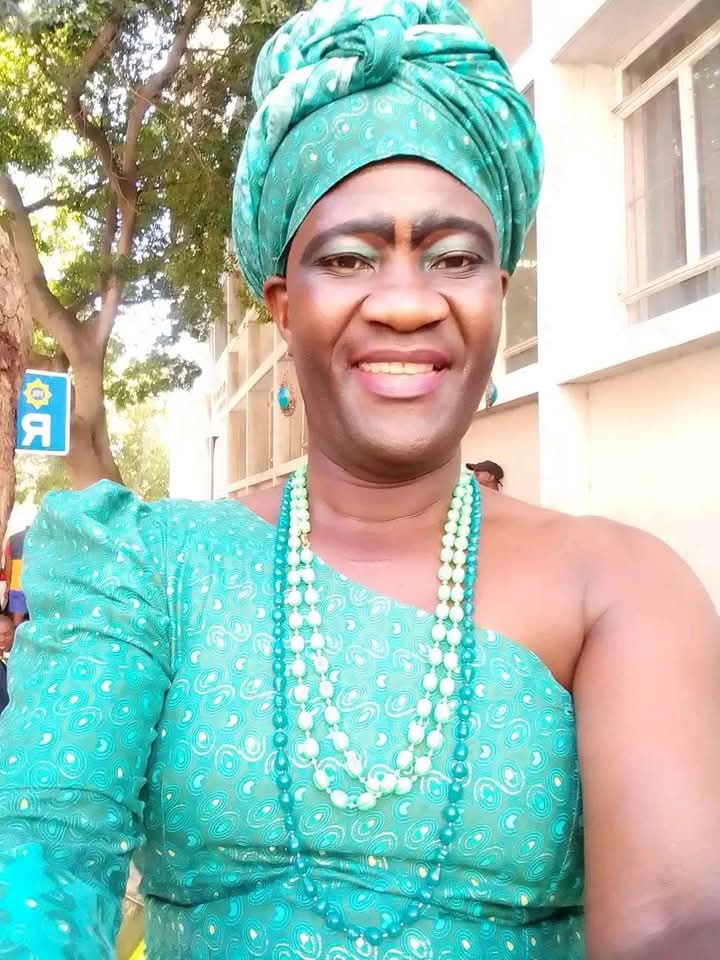
Capetown, Republic
|
May 1, 2025
Aunt Tiwo Now a Woman After A successful Surgery
Mr Tiwonge Chimbalanga AKA Aunt Tiwo who got arrested by the Malawi government under Bingu administration after getting engaged with a fellow man named Steven Muonjeza on 26th December 2008, has now successfully been transformed into a full woman by changing his genitals through a surgery in South Africa. Aunt Tiwo said his family gave him full support during the trial in 2008 because they knew what he was and had already accepted him as he is and they never condemned him for masquerading as a woman. Chimbalanga said; “I relocated to South Africa in order to seek asylum from the persecution that I was facing in Malawi for my sexual orientation”. He further said, “It all started while he was still young. I used to associate with women better and never had feelings for men ever since my childhood days. I would undress in the presence of my mother and sister who could undress as well without having the feeling that I was a boy.” When asked about his relationship with God, he said that whether what he has been doing is sinful or not, should be left in the hands of God who has the power to judge. Chimbalanga said that he is an Anglican faithful and goes to church even in South Africa just like anyone else. However, Aunt Tiwo registered his concerns that a lot of people especially fellow Malawians living in South Africa and on social media scorn him, calling him all sorts of names for being a homosexual with some quoting the Bible from the Book of Romans chapter 1 verses 24 to 27. The bible says, 1:24 [NET2.1 Free]) Therefore God gave them over in the desires of their hearts to impurity, to dishonor their bodies among themselves. (Rom 1:25 [NET2.1 Free]) They exchanged the truth of God for a lie and worshiped and served the creation rather than the Creator, who is blessed forever! Amen. (Rom 1:26 [NET2.1 Free]) For this reason, God gave them over to dishonorable passions. For their women exchanged the natural sexual relations for unnatural ones, (Rom 1:27 [NET2.1 Free]) and likewise the men also abandoned natural relations with women and were inflamed in their passions for one another. Men committed shameless acts with men and received in themselves the due penalty for their error. Miss Chimbalanga said “she” does not want to be married again because a good number of men just use and dump her after promising to marry her especially in South Africa. However, she is in sexual relationships with various men just for pleasure. At the time of the interview, Khulubvi Reporter wanted to know whether he has male or female genitals and whether he must be addressed as a female. In his response Chimbalanga said, “I successfully got a surgery to change my sexual organs from male to female because I had male ones at birth but now I am a fully flagged woman and plans to give birth to a baby if it is possible.” Chimbalanga never revealed when and where her genitals were altered. Chimbalanga confined to our reporter that his marriage with Steven Monjeza, which was publicly officiated but ended when both got arrested. “My husband Steve Monjeza broke the promise when he offered an interview to journalists soon after his release from prison. The deal to never speak to the media was reached upon when the United Nations Secretary General, Bank Moon flew into Malawi after the arrest of love birds to discuss the immediate release of Aunt Tiwo and his partner Steven Monjeza citing the need for the Malawi government to respect people’s rights to exercise their freedom based on their sexual orientations. He said they were put in separate prisons where her husband was pressurized by his family members as well as government authorities to denounce the marriage which took place before their arrest in Chileka, Township in Blantyre. Aunt Tiwo who was born male on 9th January 1986 in Traditional Authority Chimbalanga in Bvumbwe, Thyolo district but used to behave as a female since her birth does not know her father. The only information he has is that the father hailed from one of the Northern Region districts. He does not even know her siblings who were born from a different mother. He did his primary education at CI Primary School in Blantyre and his secondary education at Soche Hill Secondary School in Blantyre and proceeded to do his college education at Skyway College in the same district. Chimbalanga who now stays and works in Cape Town in South Africa after leaving Malawi a decade ago continues to act and dresses as a woman and prefers to be identified as such. Chimbalanga said, “ At least I am a bit comfortable here in South Africa because there are laws that protect LGBT and I don’t intend to go back to Malawi, not so soon. Chimbalanga was all smiles throughout the interview and considers this, his right to express herself. This is still a sticky issue in Malawi. For feedback…….
Read more