Washington State, USA
|
December 22, 2025
|
Steven Maseya II
The Life and Legacy of Gogo Daisy Gray Kufa Mapantha Maseya (1898–1985)
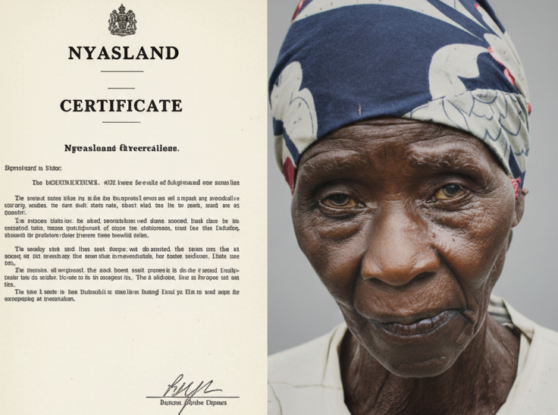
Gogo Daisy Gray Kufa Mapantha Maseya stands as a remarkable figure in Malawi’s early educational, social, and liberation history. Her life bridges missionary education, anti-colonial resistance, and the deep-rooted traditions of the Maseya Clan of Chikwawa, while also being closely linked to the historic John Chilembwe Uprising of 1915.
Gogo Daisy Gray Kufa was born in 1898 in Chiradzulu District, then part of British Nyasaland. She was the first-born child of John Gray Kufa Mapantha, a prominent figure of his time and one of the ring leaders of the 1915 John Chilembwe Uprising against British colonial rule.
Her father, John Gray Kufa Mapantha, was closely associated with Reverend John Chilembwe, sharing the ideals of African dignity, self-determination, and resistance against racial oppression, forced labour, and colonial injustices. This revolutionary environment shaped Daisy’s worldview from an early age.
One of the most defining moments of Gogo Daisy Gray’s life was her experience during the Chilembwe Uprising. She later narrated to Steven Maseya the Second who happened to be one of her grandchildren in the 1980s how, in 1915, her father was pursued by British colonial authorities for his leadership role in the rebellion.
To evade capture, John Gray Kufa Mapantha fled into hiding with his entire family, including young Daisy Gray. They took refuge along the river banks in Chiradzulu, enduring hardship and fear as colonial forces intensified their manhunt.
Tragically, their hiding place was betrayed by one of villagers, who revealed their location to the colonial authorities in exchange for £40, a significant sum at the time. This betrayal led to her father’s capture, marking a painful chapter in the family’s history and a lasting memory in Daisy’s life. he later was executed in Zomba after a sham trial.
Despite political persecution and instability, Daisy Gray Kufa excelled academically. In 1913, at a young age, she enrolled at the Nyasaland United Educational Institutions of the Church of Scotland at HHI (Henry Henderson Institute), Blantyre—one of the most prestigious missionary education centres of the time.
In September 1913, she successfully graduated with a Teacher’s Probationary Certificate, becoming part of the earliest generation of formally trained African women educators in Nyasaland. Teaching was not only a profession but also a form of empowerment and community service during a period when African education was heavily restricted.
She served as a teacher by profession, contributing to literacy, moral education, and social advancement, particularly for young Africans and girls.
Gogo Daisy Gray Kufa later married Mr Steven Maseya, a respected man from Traditional Authority Maseya in Chikwawa District. Through this marriage, she became firmly rooted in the Maseya Clan, a lineage known for its strong cultural identity and historical presence in the Lower Shire Valley.
Following her marriage, she was known as Daisy Gray Kufa Mapantha Maseya, symbolizing the union of two influential families—one associated with national resistance and the other with deep traditional authority.
Gogo Daisy Gray Maseya was a devoted mother of eight children. Over time, most of her children passed on, and the only surviving son is Mr Fraser Maseya, the last-born in the family. Through her children and descendants, her legacy continues—carrying forward the intertwined histories of education, resistance, faith, and culture.
In her later years, Gogo Daisy Gray Mapantha Maseya lived at Mwalo, under Traditional Authority Changata in Thyolo District. She was widely respected as an elder, a former teacher, and a living witness to some of Malawi’s most significant historical moments.
She passed away in 1985 at the age of 87, leaving behind a powerful legacy rooted in courage, learning, and sacrifice. Gogo Daisy Gray Kufa Mapantha Maseya occupies a unique place in Malawian history:
-
As the daughter of a John Gray Kufa, one of the freedom fighters, she represents the human side of Malawi’s liberation struggle.
-
As an early female educator, she symbolizes African women’s advancement through education
-
As a member of the Maseya Clan of Chikwawa and Thyolo, she embodies cultural continuity and resilience
Her life reflects the broader story of Malawi’s journey from colonial subjugation to self-awareness and nationhood. Gogo Daisy Gray Kufa Mapantha Maseya remains a matriarch whose story deserves remembrance, honour, and preservation for future generations.
Comments
0